
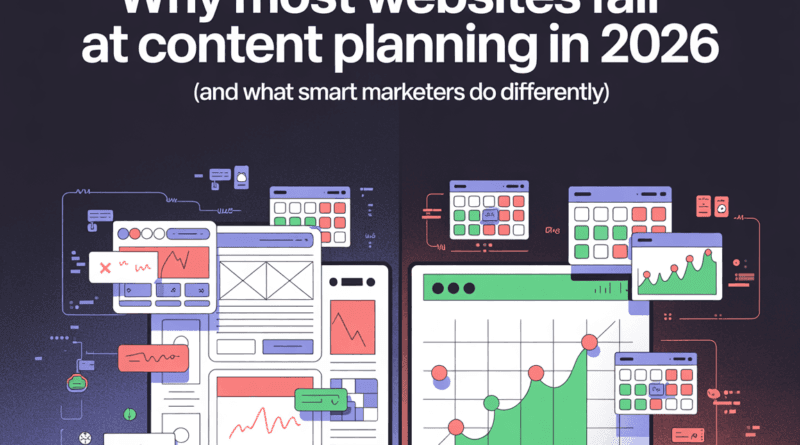
Why Most Websites Fail at Content Planning in 2026 (And What Smart Marketers Do Differently)
Publishing content is easy.
Publishing content that consistently ranks, attracts traffic, and builds authority? That is where most websites fail.
In 2026, competition is no longer about who writes the most. It is about who plans the smartest.
And the uncomfortable truth is this:
Most websites do not have a real content planning strategy.
They have ideas. They have motivation. They have occasional inspiration.
But they do not have a system.
Let’s break down why content planning fails — and what high-performing marketers do differently.
The Real Reason Content Marketing Fails
If you analyze underperforming blogs, you will often notice patterns:
- Inconsistent publishing
- Random topic selection
- No seasonal alignment
- No keyword clustering
- No long-term roadmap
The problem is not content quality.
The problem is the absence of structured SEO content planning.
Without structure, content becomes reactive. And reactive publishing rarely wins in search engines.
Content Without Timing Is Invisible
Search engines reward relevance and timing.
For example:
- Black Friday content must be published months in advance.
- Back-to-school guides need to go live before peak search volume.
- Tax season content must anticipate demand.
Publishing at the moment of the event is already too late.
Successful websites operate ahead of search trends.
They map the year. They identify demand cycles. They plan strategically.
That level of preparation does not happen by accident.
Why “Publishing When Inspired” Does Not Scale
Many creators rely on inspiration.
They ask: “What should I post this week?”
That question alone reveals a structural problem.
High-performing marketers never start the week wondering what to publish.
They already know.
Because their content marketing strategy is predefined.
When planning is systemized:
- Decisions are faster
- Workflows are clearer
- Priorities are aligned with business goals
- Internal linking becomes intentional
- Topical authority grows naturally
Inspiration becomes optional. Strategy becomes permanent.
The Difference Between Amateurs and Professionals
Amateurs create content.
Professionals build content ecosystems.
An ecosystem includes:
- Evergreen pillars
- Supporting cluster articles
- Seasonal opportunities
- Trend-based slots
- Conversion-focused content
- Internal linking architecture
Without a structured roadmap, most websites publish disconnected articles that never compound.
The result?
Traffic spikes. Then silence.
Real SEO growth is cumulative. It requires structure.
SEO Content Planning Is an Operating System
Think of content planning not as a calendar, but as an operating system.
An effective SEO content planning system should:
- Map 12 months of search demand
- Align content with seasonal events
- Integrate keyword clusters
- Include workflow tracking
- Reduce decision fatigue
- Adapt to trends
Most spreadsheets attempt to do this.
Few actually succeed.
Because manual planning breaks when:
- Priorities shift
- Teams grow
- Trends change
- Publishing frequency increases
At that point, guesswork returns.
And guesswork kills momentum.
What Smart Marketers Do Differently
Websites that dominate organic traffic usually have three things in common:
1. They Plan 90 Days Ahead
Not randomly. Strategically.
They anticipate search intent before the spike happens.
2. They Combine Evergreen and Seasonal Content
Evergreen builds stability. Seasonal builds spikes.
Together, they create predictable growth.
3. They Use a Structured Content Operating System
Instead of asking:
“What should we publish?”
They ask:
“What does our system tell us to publish next?”
That subtle shift changes everything.
A structured SEO content planning system:
- Aligns content with search demand
- Maps seasonal opportunities
- Organizes keyword clusters
- Supports long-term authority building
- Eliminates decision fatigue
The Hidden Cost of Disorganized Content
Lack of structure leads to:
- Missed ranking opportunities
- Cannibalized keywords
- Weak internal linking
- Inconsistent authority signals
- Burnout
Many creators quit not because SEO does not work — but because chaos is exhausting.
A structured content workflow reduces stress and increases output quality.
Static Templates vs Structured Content Systems
Traditional content templates often come as:
- Basic spreadsheets
- Printable PDFs
- Static editorial calendars
The issue?
They do not adapt.
Modern content marketing requires:
- Search-based alignment
- Real-time adjustments
- Event mapping
- Keyword visibility
- Execution tracking
A dynamic SEO content planning system performs better than a static document.
Because SEO itself is dynamic.
As explained in Google’s SEO Starter Guide, search visibility depends on structured content, clear hierarchy, and relevance signals — not just publishing frequency.A Smarter Way to Plan Content in 2026
If you are serious about long-term organic growth, you need more than ideas.
You need structure.
Instead of building everything manually, many marketers now rely on structured SEO content planning systems that:
- Map daily publishing opportunities
- Align content with seasonal events
- Integrate keyword logic
- Support internal linking strategy
- Provide workflow clarity
Operating from a predefined SEO roadmap eliminates randomness.
And randomness is the enemy of rankings.
Final Thoughts
Content marketing does not fail because of poor writing.
It fails because of poor planning.
In 2026, websites that win are not necessarily the loudest.
They are the most organized.
If your goal is consistent traffic, stronger authority, and predictable growth, your focus should not be on writing more.
It should be on planning better.
Because when your content strategy becomes structured, execution becomes simple.
And when execution becomes simple, growth becomes inevitable.
Frequently Asked Questions
What is SEO content planning?
SEO content planning is the process of organizing content creation around keyword demand, seasonal trends, and strategic goals to maximize organic traffic.
How far in advance should you plan content?
Most high-performing websites plan at least 90 days ahead, especially for seasonal or event-based topics.
Is a spreadsheet enough for content planning?
For beginners, yes. But as content scales, a structured and dynamic system performs better.
Why does consistent publishing matter?
Search engines reward consistency, topical authority, and structured growth. Random publishing rarely builds momentum.
If your content feels chaotic, the problem is rarely creativity.
It is structure.
And structure is what separates websites that grow from websites
The Roadmap: Turning Content Planning into a System
An SEO content planning system is not a spreadsheet. It is a rhythm. It is the cadence that keeps you publishing when life gets busy. It is what prevents you from waking up and thinking: “What do I post today?”.
The key is to design a system you can actually stick to. Not a perfect one. A consistent one.
Step 1: Define Your 12-Month Growth Themes
Your brand is not random. Your content should not be either. Pick 3 to 5 major themes that matter for the next 12 months. Then break each theme into subtopics. This prevents you from publishing disconnected articles that don’t compound.
Step 2: Build Your Keyword Vault
Most people start with keywords. Smart marketers start with intent.
Inside your keyword vault, classify everything like this:
- Evergreen keywords (long-term compounding)
- Seasonal keywords (peaks every year)
- Trend keywords (short lifespan, fast traffic)
- Cluster keywords (supporting topics)
When you classify keywords this way, content planning becomes strategic instead of reactive.
Step 3: Map Seasons Before They Happen
Seasonality is the invisible killer. If you publish Valentine’s content in February, it’s already late.
Seasonal content should be drafted 60–90 days before the peak. That way you have time for:
- content creation
- internal linking
- indexing
- performance updates
Step 4: Convert Strategy into Weekly Execution
Planning is useless if you don’t know what to do on Monday. Here is a simple weekly execution cadence that scales:
- Monday: keyword review + content brief
- Tuesday: draft
- Wednesday: edit + internal links + schema basics
- Thursday: publish
- Friday: update existing content
This is how you build authority without burnout.
Step 5: Build a Repeatable Content Brief
The biggest quality upgrade you can make isn’t writing more. It’s writing from a better brief.
A good brief includes:
- search intent summary
- target keyword + variations
- outline (H2/H3)
- internal links to include
- external sources to cite
- CTA and next step
Step 6: Use a Structured System to Remove Decisions
When content is chaotic, your brain refuses to do the hard work. When content is structured, execution becomes automatic.
If you already have a content planning system that tells you exactly what to publish and when, you don’t need motivation. You just follow the system.
Step 7: Internal Linking Like a Pro
Internal links are not decoration. They are SEO infrastructure.
For every new piece, ask:
- What pillar does this support?
- What previous articles should it link to?
- What future articles should link back to it?
- What anchor text looks natural?
Your goal is to build pathways for Google and humans.
The Reality: Most Marketers Don’t Fail Because They Don’t Know
They fail because they don’t have a system that survives real life. No time. No structure. Too many decisions.
The solution is not “publish more”. The solution is “publish
Content Planning Checklist (Copy/Paste)
Want a structured SEO content system instead of guessing what to publish next?
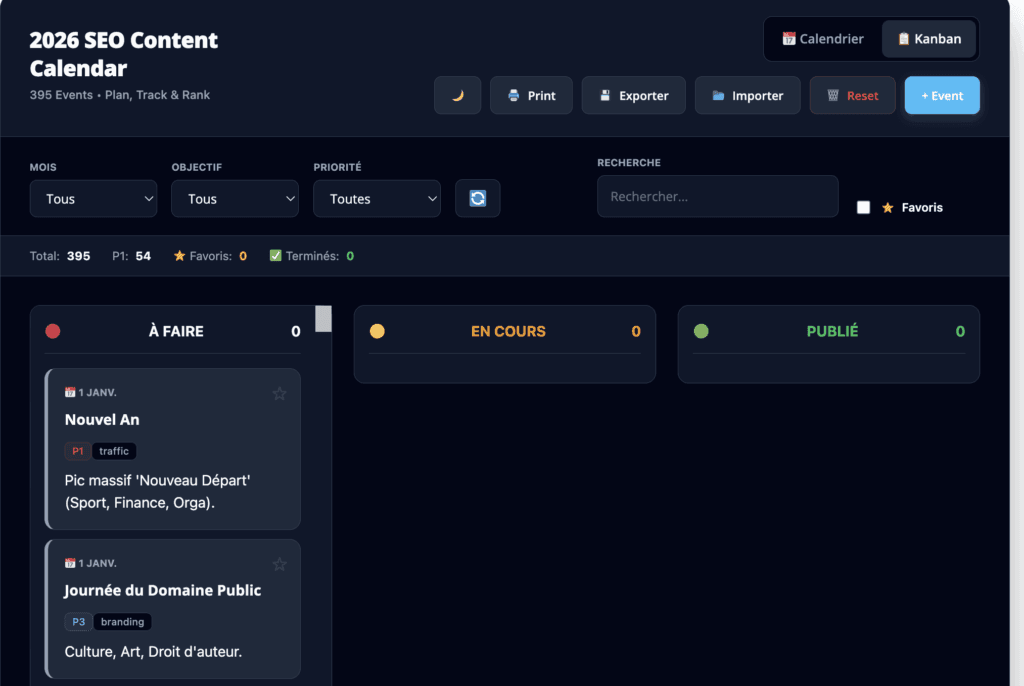
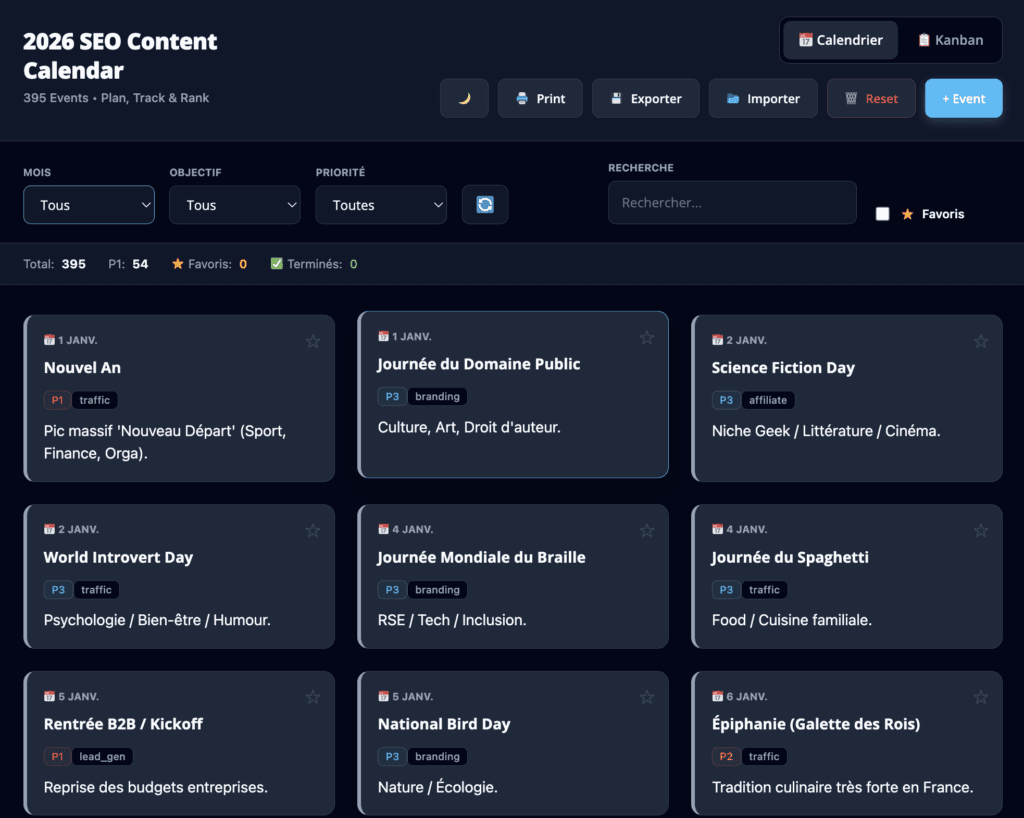
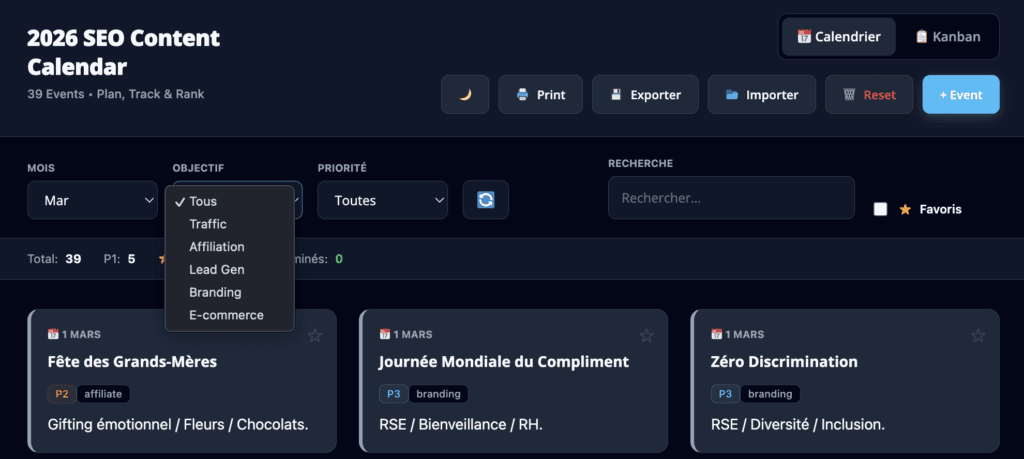
Use the SEO Content Calendar (365+ ideas, seasonal events, planning workflow)
Browse daily SEO content opportunities, plan ahead, and stay consistent without rebuilding your strategy from scratch.
Open the SEO Content Calendar Free, interactive, no signupUse this as a weekly routine. If you do nothing else, do this.
- Review search intent for the week
- Identify 2 keywords: one evergreen, one seasonal
- Draft 1 outline with H2/H3 structure
- Add internal links to 3 existing articles
- Add 1 external trusted citation (no fluff)
- Write a concise introduction (hook + promise)
- Draft CTA: what should the reader do next?
How to Audit Your Current Content Strategy
If your content is inconsistent, don’t just publish more. Audit what you already have.
Ask these questions:
- Do we have clear content themes?
- Are we posting topics that are too broad?
- Does our internal linking connect clusters?
- Are we publishing seasonal content early enough?
- Do we have a backlog of keyword ideas?
Audit is uncomfortable because it reveals the gap between activity and strategy. But once the gap is visible, you can fix it.
Recovery Plan: If You Miss Your Publishing Schedule
Everyone falls behind at some point. Smart marketers recover fast.
Here’s the recovery plan:
- Stop creating new ideas for 7 days
- Republish and refresh two old articles
- Add internal links to your biggest pillar page
- Push one new article that connects the cluster
- Reset your weekly cadence
The goal is to reestablish momentum. Not perfection.
The Compound Interest of SEO Content Planning
SEO is compound interest. The first 10 articles feel invisible. The next 30 articles start building signals. After 60 articles, your site has a predictable structure.
That’s when Google understands your topical authority.
Most people quit before that moment. Because they never had a planning system that made the work sustainable.
A Mini 30-Day SEO Content Planning Schedule
If you want a fast result, follow this 30-day structure:
- Week 1: 2 evergreen articles + internal links
- Week 2: 2 seasonal articles (published early)
- Week 3: update old content + add internal links
- Week 4: 1 trend-based article + 1 pillar upgrade
This schedule balances stability and speed.
Why a Structured Content System Is the Real Competitive Advantage
Information isn’t the advantage anymore. Everyone can read about SEO.
The advantage is execution. Execution comes from systems.
Systems reduce decisions. Fewer decisions means less resistance. Less resistance means more consistent publishing. More consistent publishing means higher chance of ranking.
This is why relying on a structured content calendar (one that maps seasons, keywords and workflow) is such a multiplier. It turns SEO from a guessing game into a predictable process.
Where to Start
If you don’t have a system yet, start simple:
- choose your themes
- build a keyword vault
- map seasons
- plan 90 days ahead
- build a weekly cadence
Then, if you want to go further, you use a structured content calendar system that already does the heavy lifting. Because the real value is the structure.
When execution becomes easy, you free up bandwidth for strategy.
And strategy is what your competitors often lack. They are not losing because they cannot write — they are losing because their content planning is reactive.
In other words: content planning is not a “nice to have”. It is an operating system.
The 3 Levers of a Great SEO Content Planning Strategy
1) Demand
You need a reliable way to capture search demand.
That does not mean guessing what people want. It means monitoring patterns, tracking the keywords that actually bring traffic, and mapping intent.
A well-designed SEO content planning process helps you filter signal from noise. It forces you to choose what matters.
2) Distribution
Publishing is not distribution.
If you want backlinks and consistent organic growth, you need a distribution cadence:
- internal linking updates
- content repurposing into short formats
- outreach to relevant sites and communities
- smart social promotion
This becomes much easier when you have a structured plan instead of ad-hoc effort.
3) Compounding
The best content strategies compound over time.
Every article supports another. Every internal link strengthens the network. Every updated post keeps the library fresh.
Without a content calendar mindset, your blog becomes a pile of disconnected posts.
But with structure, it becomes a machine.
A Practical Backlink Strategy for an SEO Content Planning System
You do not need to “beg” for backlinks.
Instead, you create linkable assets:
- research summaries
- evergreen frameworks
- step-by-step checklists
- curated resources
- opinionated trend reports
Then you reference them naturally across your content.
When a post links to another, it is not a random move. It is part of the plan.
Writer’s Block Doesn’t Exist with the Right System
Writer’s block often happens when planning is vague.
If your content planning is clear, writing becomes execution.
I like to keep a simple structure for each piece:
- one promise
- one core idea
- proof/examples
- a next step
That “next step” is key.
A well-built SEO content planning strategy automatically creates next steps:
- publish today’s piece
- update last quarter’s pillar
- schedule a seasonal refresh
- add internal links
The Big Mistake: Treating Content Like an Event
Content is not an event.
It is a system.
And systems win.
Bonus: Content Briefs That Don’t Waste Time
Most content plans die in the briefing stage because briefs are either too vague or too heavy.
Keep it simple and consistent:
- target keyword + 3 secondary keywords
- intent summary (informational / commercial / local)
- outline with H2/H3
- internal links to add
- one CTA and one “next piece” suggestion
Repurposing Without Losing SEO Integrity
Repurposing is not about copying.
It is about translating the same core idea into formats that reach different audiences:
- blog post → LinkedIn carousel
- pillar guide → Quora answers
- checklist → downloadable PDF
- stat sheet → outreach asset
Repurposing is at its best when the calendar already tells you what’s coming next.
When Should You Update Old Posts?
A good rule of thumb:
- update winners quarterly
- refresh seasonal content annually (ahead of the event)
- consolidate posts that compete for the same keyword
- prune posts that don’t serve your topical authority
A Realistic Definition of “Consistency”
Consistency does not mean publishing every day.
It means publishing on a schedule you can sustain.
And sustainability comes from structure.
If you keep burning out, your system is broken — not your motivation.If you want a system that supports SEO planning and
Final Thoughts
Most content strategies fail because they rely on effort, not structure.
If you build a simple system that keeps you ahead of seasonal demand, aligns keywords with themes, and forces internal linking, you stop guessing — and you start compounding results.
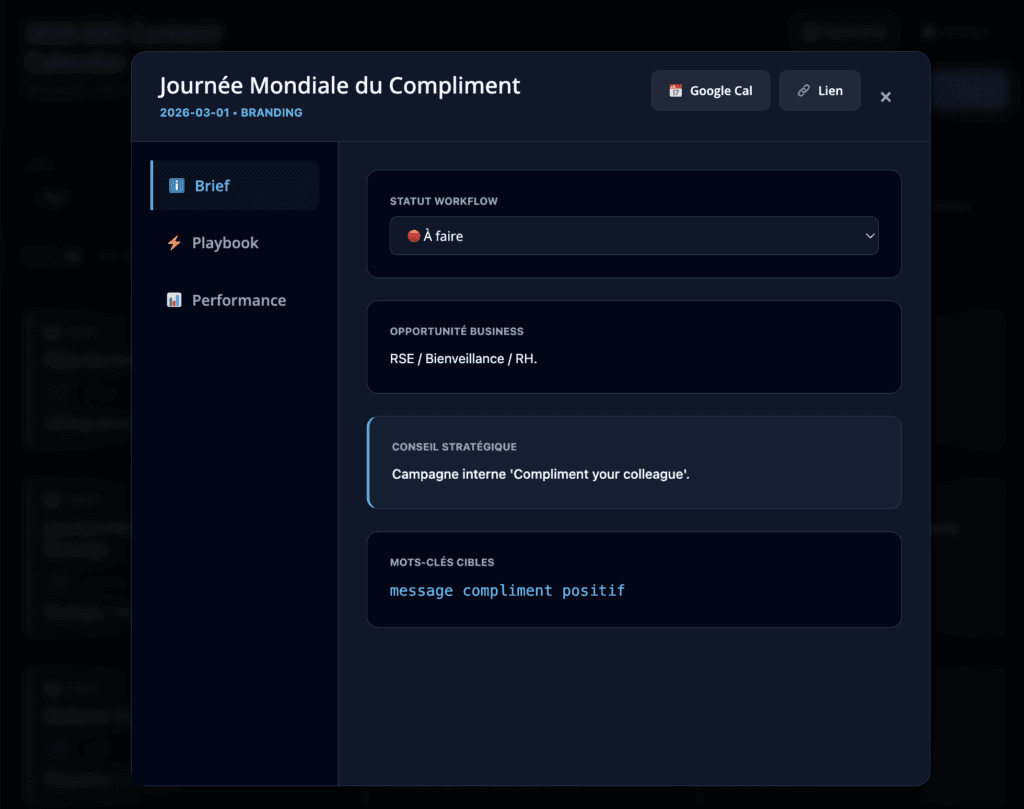
You do not have to invent a planning system from scratch.
What matters is that you operate like a professional: plan, publish, refresh, and repeat.
When your content calendar is doing that heavy lifting for you, SEO stops being random and starts being predictable.makes content
If you stick to a calendar-driven routine, rankings become the by-product of discipline.execution predictable, you build structure into your calendar — and you stick to it.